
Extracted and translated from vijñapti to Śrī Haribhakti Vilāsa by Śrī Haridās Śāstri.
The word “mānasa-bhāva” represents two types of bhāva (emotional state): sthāyī (permanent) bhāva and sañcārī (transient) bhāva. The term “prīti-viṣādātmaka” indicates both “rāgātmaka” (affectionate) and “dveṣātmaka” (spiteful) dispositions. Vācika-ceṣṭā, or verbal action, includes activities such as kīrtana (glorification). Mānasa-ceṣṭā, or mental action, denotes activities such as smaraṇa (remembrance), while śārīra-ceṣṭā, or bodily action, points to activities such as śravaṇa (listening) and so on. Nivṛttyātmaka-ceṣṭā refers to actions that of the nature of giving up , while pravṛttyātmaka-ceṣṭā indicates those that are of the nature of acquiring, accepting.
ānukūlyamaya means pleasing or likeable. Therefore, actions performed with the mind, speech and body as well as emotional dispositions that emerge successively in relation to Śrī Kṛṣṇa Himself, or to something connected with Him, which are not displeasing but are pleasing to the intended recipients of one’s service, are referred to by terms such as paricaryā (devoted service), sevā (service), varivasyā (service, honour), and sad-vyavahāra (saintly conduct). All these are denoted by the word bhakti. Actions or mental dispositions that are displeasing to one’s object of service, but conform to one’s own mental inclinations, lack the inherent nature of bhakti. In other words, they are not bhakti at all. They are merely expressions of self-centeredness or self-nourishment (ātmambharitā).
This bhakti is of two kinds: sopādhikī (conditional) and nirupādhikī (unconditional). Bhakti has two upādhis (limiting adjuncts). One is anyābhilāṣa (desire for things other than bhakti) and the other is anya-miśraṇa (mixture with things other than bhakti). Bhakti that is upādhi-viśiṣṭā, or characterised by limiting adjuncts, is called sopādhikī or gauṇī (secondary) bhakti. On the other hand, bhakti that is upādhi-śūnyā, or devoid of such limiting adjuncts, is called nirupādhi or mukhyā (primary) bhakti. The word uttamā in the core definition (mūla-lakṣaṇa) of uttamā-bhakti means mukhyā (principal). Hence, if the aforementioned actions and emotional dispositions are devoid of desires for things other than bhakti (anyābhilāṣa) and are not mixed with other things (anya-miśraṇa), they comprise uttamā-bhakti. All these are secondary adjectives (gauṇa viśeṣaṇa) of uttamā-bhakti, since they describe its extrinsic characteristic (taṭastha-lakṣaṇa).
The word anyābhilāṣa indicates desires or longings for sense enjoyment (bhoga-vāsanā), the pining for liberation from material existence (mokṣa-vāsanā) and so on. The word anya-miśraṇa represents practices in the paths of jñāna, karma, and so on. Here, jñāna refers to the mental conception of oneness between the jīva and Brahman (jīva-brahmaikya-jñāna), karma refers to the duties prescribed in the smṛti-śāstra such as the set of daily/occasional (nitya-naimittika) duties, while ādi (others) refers to endeavours such as dry renunciation (śuṣka-vairāgya), sāṅkhya (the philosophy of sāṅkhya), aṣṭāṅga-yoga, and so on. Therefore, when the previously mentioned conduct is free from the desire for mukti and consists solely of activities such as śravaṇa, and so on, it is called uttamā-bhakti. This uttamā-bhakti is also referred to as nirguṇā, śuddhā, kevalā, mukhyā, ananyā, akiñcanā, and svarūpa-siddhā. Since there is no mixing with elements like the pursuit of jñāna aimed at mukti , and no tendency to desire things other than bhakti itself, the supremacy (uttamatva) or pristine nature (śuddhatva) of bhakti is established.
Bhakti endowed with the desire for bhoga-vāsanā is called sakāmā-bhakti, or bhakti that co-occurs with material desires. Bhakti imbued with mokṣa-vāsanā is referred to as niṣkāmā-bhakti, which, though free from sense-desire, is governed by the desire for mukti.
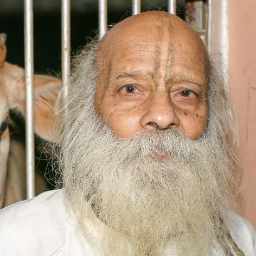
Śrī Haridās Śāstri in Śrī Haribhakti Vilāsa
Bhakti endowed with the desire for bhoga-vāsanā is called sakāmā-bhakti, or bhakti that co-occurs with material desires. Bhakti imbued with mokṣa-vāsanā is referred to as niṣkāmā-bhakti, which, though free from sense-desire, is governed by the desire for mukti. Since it is imbued with the bindings of the tāmasa– and the rājasa-guṇas, sakāmā-bhakti is also called saguṇā-bhakti, or bhakti tinged by the guṇas. The people suited for this bhakti (adhikārīs) are those who are distressed (ārta) and those who crave material wealth (arthārthī). The fruit (phala) of such bhakti is material pleasure, such as is available in the heavenly realm (svarga).
This sakāmā-bhakti, when characterised by the binding of sattva-guṇa, becomes endowed with a desire for mukti and is then known as niṣkāmā. The mumukṣus, aspirants of mukti are suited to pursue this bhakti (adhikārīs). This niṣkāmā-bhakti, endowed with mokṣa-vāsanā, is generally mixed with jñāna, yoga, and karma. It is called karma-miśrā-bhakti when mixed with karma, yoga-miśrā-bhakti when mixed with yoga, and jñāna-miśrā-bhakti when mixed with jñāna. The fruit of karma-miśrā-bhakti is the purification of one’s mind (citta-śuddhi), that of yoga-miśrā-bhakti is stage-by-stage liberation (krama-mukti) after the direct realisation of Paramātma (paramātma-sākṣātkāra), while that of jñāna-miśrā-bhakti is immediate liberation (sadyo-mukti) following the direct realisation of Brahman (brahma-sākṣātkāra).